

#1 Fokker DR1 Triplane
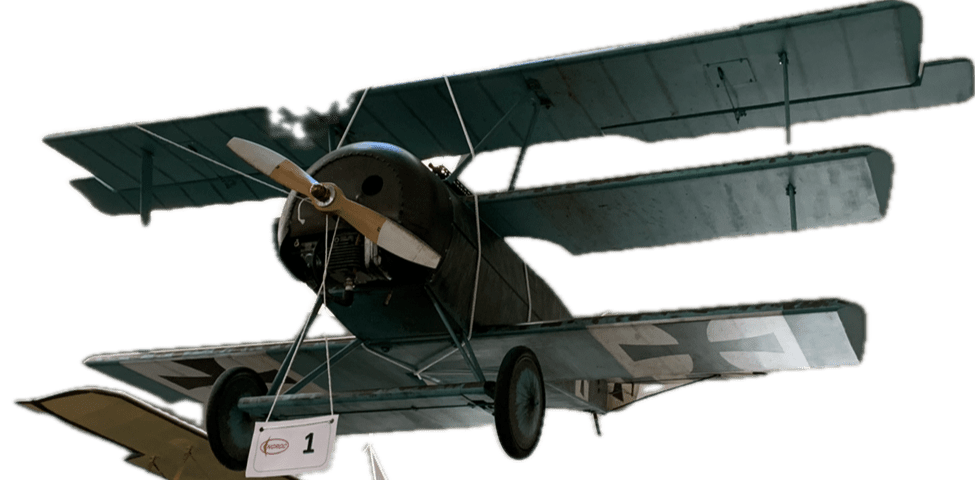
The Fokker Dr.I, famously known as the “Dr.I Triplane,” was a German fighter aircraft utilized during World War I. Designed by Reinhold Platz for Fokker-Flugzeugwerke, it gained widespread recognition due to its distinctive triplane configuration. Introduced in 1917, the Dr.I was primarily associated with the renowned German flying ace Manfred von Richthofen, also known as the “Red Baron,” who achieved many of his victories while flying this aircraft.
The Fokker Dr.I was known for its exceptional maneuverability and climbing ability. Its three-wing design provided impressive agility and allowed for sharp turns and swift ascents. The aircraft was powered by a rotary engine and featured a unique airframe construction that gave it an advantage in dogfights, making it a formidable opponent in aerial combat. Despite its success and notable reputation, the Dr.I had some drawbacks, including structural issues and limitations in its speed and overall performance, but its exceptional maneuvering capabilities made it a favorite among many pilots during its operational tenure in World War I.
Courtesy of Bob Boulais of Vernon
#2 Telemaster Trainer
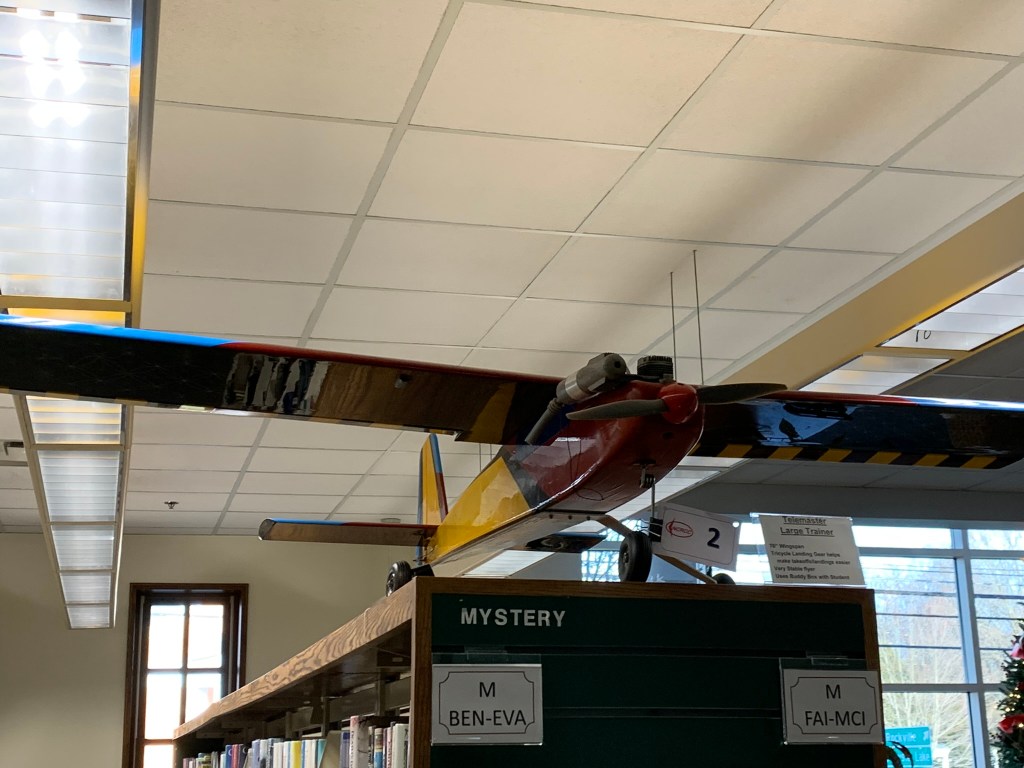
The Telemaster Trainer model is a popular radio-controlled airplane designed primarily for training and learning purposes. Manufactured by various companies and available in different sizes and configurations, the Telemaster Trainer is recognized for its stability, ease of control, and forgiving flight characteristics, making it an ideal choice for beginners and novice RC pilots. Its high-wing design, durable construction, and predictable flight behavior allow aspiring pilots to practice basic flying maneuvers, including takeoffs, landings, and basic aerobatics, fostering skill development and confidence in handling remote-controlled aircraft. The Telemaster Trainer’s versatility, combined with its reputation for being a reliable and user-friendly model, has made it a preferred choice for entry-level pilots seeking a platform for learning and honing their flying skills in the world of radio-controlled aviation.
This model has a 76″ wingspan and large tricycle landing gear. It is an ideal trainer for new pilots.
Courtesy of Irv Thurrott of South Windsor
#3 French Nieuport 17
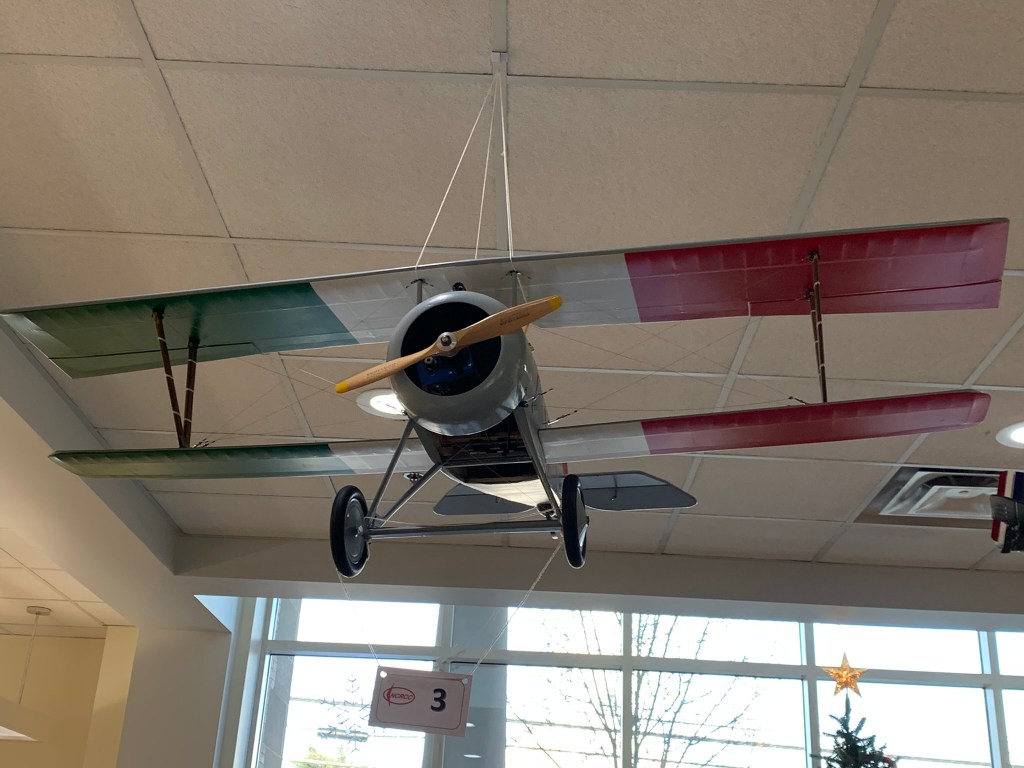
The Nieuport 17 was a French biplane fighter aircraft employed during World War I, notable for its agility and maneuverability. Introduced in 1916, it was an evolution of the earlier Nieuport 11 and represented an improvement in design and performance. The Nieuport 17 was lauded for its exceptional climbing ability, responsiveness, and ease of handling, making it a favored choice among Allied pilots during the war.
This aircraft was equipped with a more powerful engine than its predecessor, enhancing its performance in aerial combat. Its single machine gun was synchronized to fire through the propeller arc, allowing for accurate aiming without risking damage to the propeller blades. The Nieuport 17’s lightweight structure and superior maneuverability made it a formidable opponent in dogfights against German aircraft. Pilots praised its capabilities in executing sharp turns and evasive maneuvers, contributing significantly to its success in air engagements. T
This model is painted in the colors of the famous Italian Ace Francesco Baracca. The prancing horse emblem was part of the family crest and after Baracca was shot down and killed in 1919, it was given to his good friend Enzo Ferrari for use on the automobiles he was beginning to manufacture.
Courtesy of Bob Laflamme of Enfield
#4 Clik-ng Precision Aerobatic Monoplane

This is a medium-sized aircraft designed specifically for precision flying. The large control surfaces with lots of movement allow the aircraft to execute nearly square turns, and very sharp transitions from level to vertical. It can fly straight up, stop and hover, and descend all while pointing up.
It is not modeled after any full-size aircraft, but specifically designed for model competition.
this particular model has over 8,000 flights with a total of flight times over 34 days.
Courtesy of Irv Thurrott of South Windsor
#5 Avitron v2.0 Bionic Bird

This model flies by flapping its wings just like a bird.
The tail is adjustable for level flight, adding throttle makes the bird climb, reducing it makes it descend.
Ailerons allow for turns.
Radio range of 300 feet.
Courtesy of Irv Thurrott of South Windsor
#6 EV-14
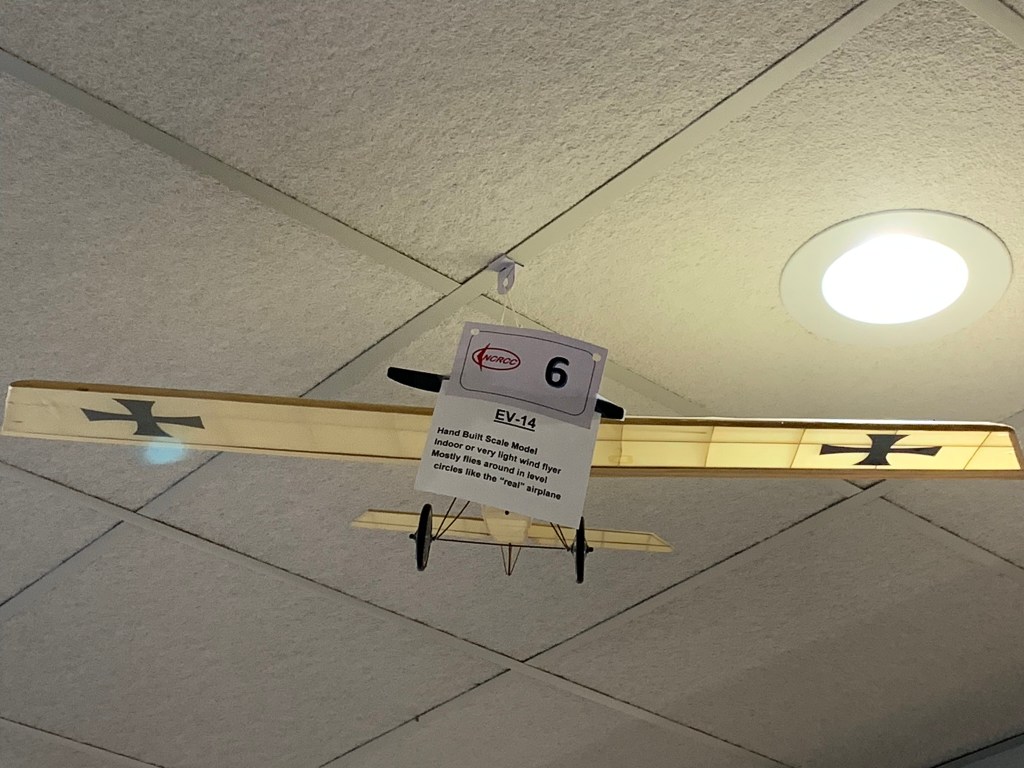
This is a lightweight, Hand Built Scale Model Indoor or very light wind flyer Mostly flies around in level circles like the “real” airplane
Courtesy of Irv Thurrott of South Windsor
#7 ‘Shoestring’ Pylon Racer
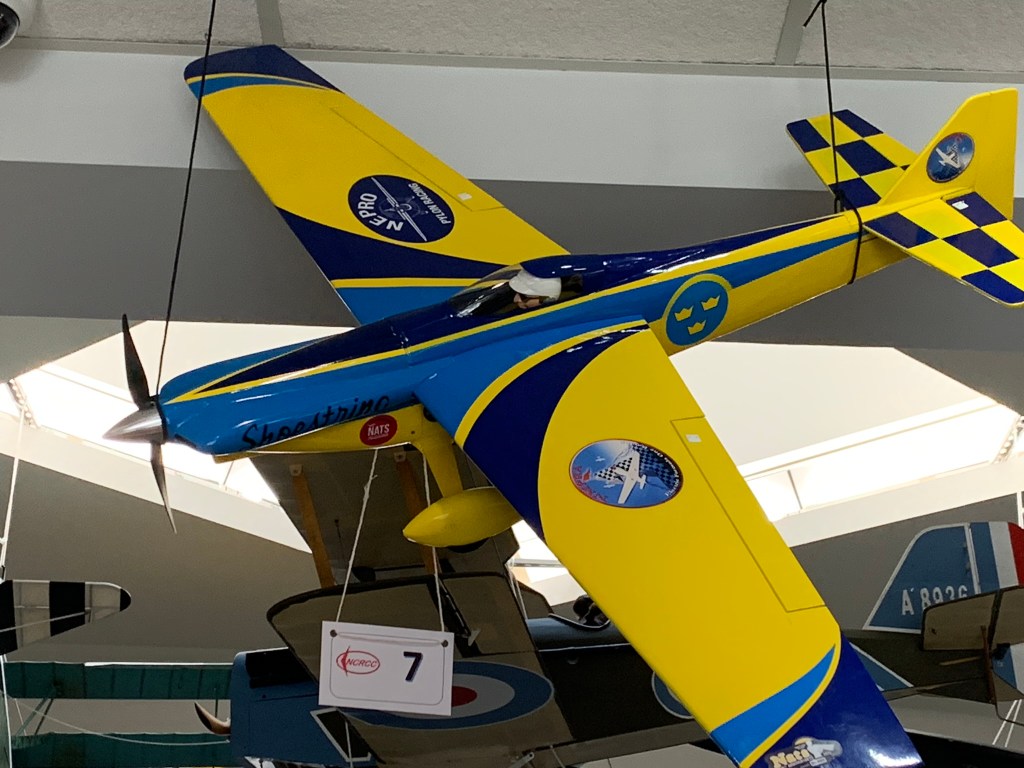
The Shoestring is a purpose-built model for high-speed pylon racing. In these races, four pilots simultaneously guide their models around a 600-foot, triangular course. The four pilots and their assistants stand in the center of the course and race for 10 laps called a heat. There are up to 10 heats in a race and the pilots are mixed for each so that they all get to fly against each other. The heat times are recorded and used to determine the overall winner of the event.
A heat usually lasts between 60 seconds for the fastest class to 90-120 for the slower classes.
This model is used for the fastest class and flies at speeds up to 230 MPH. Leo Nordell, the owner and pilot holds several US and World championships in pylon racing.
Courtesy of Leo Nordell of South Windsor
#8 Royal Aircraft S.E.-5a

The S.E.5a, also known as the Royal Aircraft Factory S.E.5a, was a British biplane fighter aircraft prominently used during World War I. Developed by the Royal Aircraft Factory in partnership with various manufacturers, including Wolseley Motors and Vickers, the S.E.5a entered service in 1917 and quickly gained a reputation as one of the best Allied fighters of the war. Powered by a V8 engine, the S.E.5a boasted excellent speed, maneuverability, and climb rate, making it a versatile aircraft for both aerial combat and reconnaissance missions.
Equipped with synchronized machine guns firing through the propeller arc, the S.E.5a was an agile and potent fighter in engagements against German aircraft. Pilots admired its stability, robust construction, and responsive controls, which made it a favorite among many aviators. Its strong performance and adaptability in various roles contributed significantly to the success of Allied air forces during the latter stages of World War I. The S.E.5a remained in service even after the war’s conclusion, influencing later aircraft designs and leaving a lasting legacy in aviation history.
This model is painted in colors of the Canadian Ace Billy Bishop
It is powered by a 42cc gasoline engine and weighs 26 pounds.
Courtesy of Bob Laflamme of Enfield
#9 Tutor II Control Line Aerobatic Trainer
T
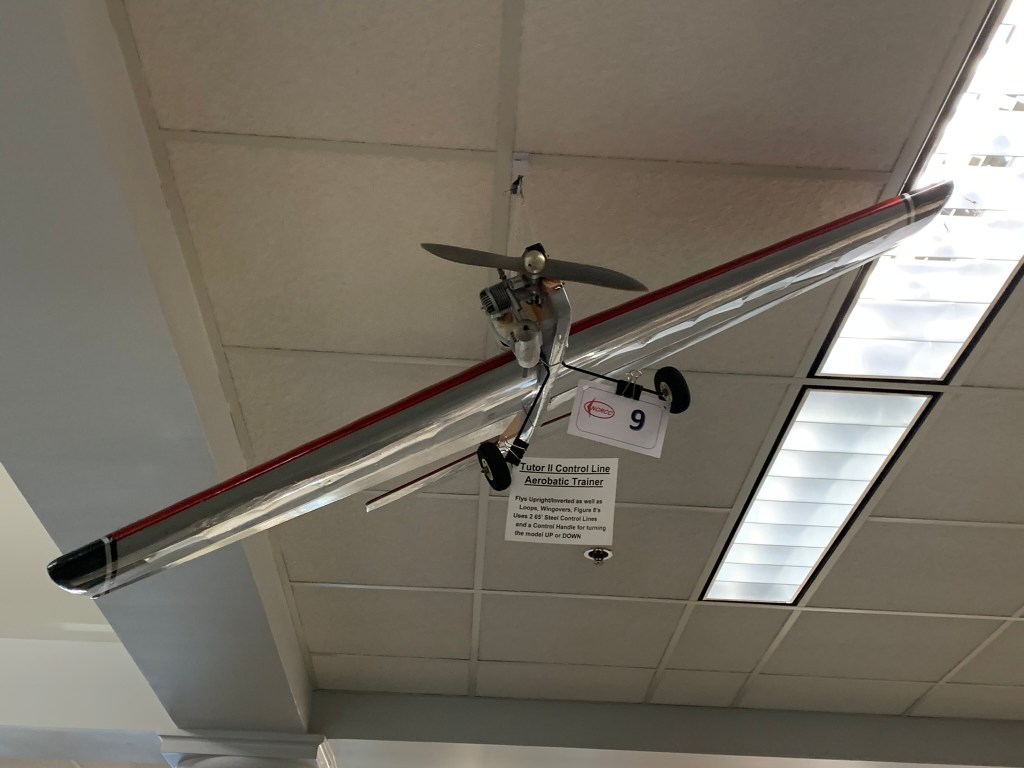
his is not a radio-controlled model, it is referred to as a ‘control-line’ model and flies in a circle. The pilot holds a control handle connected to two steel wires 65′ long which are used to make the aircraft climb or descend. The pilot must maintain a firm hold on the handle at all times to keep the airplane under control.
This model is capable of loops, flying inverted, figure 8’s and wingovers.
Courtesy of Irv Thurrott of South Windsor
#10 ‘SuperCat’ Quarter-Midget 40 (Q40) Racing Airplane

The Q40 racing model is a high-performance racing aircraft specifically designed for Q40 racing competitions. These races involve small, high-speed, pylon-mounted racing planes that adhere to strict regulations regarding size, weight, and engine specifications. Q40 racing models typically feature a streamlined design with composite materials, such as carbon fiber, for reduced weight and increased structural strength. They are powered by small but powerful engines, often running on methanol fuel and capable of reaching speeds exceeding 200 miles per hour (320 km/h). These models are meticulously crafted to prioritize speed, agility, and maneuverability, making them thrilling and challenging to fly in competitive racing events that involve navigating a course marked by pylons at extreme speeds.
This model uses a 6cc (0.4 cubic inch), 2-stroke engine producing over 5HP buring a mixture of Methanol Alcohol, NitroMethane and oil.
Courtesy of Lloyd Burnham of South Windsor
#11 Fokker DVIII

The Fokker D.VIII, also known as the Fokker E.V, was a German fighter aircraft developed towards the end of World War I. It was designed by Reinhold Platz and Anthony Fokker and entered service in 1918. The Fokker D.VIII was a departure from earlier Fokker designs, featuring a cantilever low-wing monoplane configuration instead of the biplane layout commonly used by most aircraft of that era.
This aircraft was known for its exceptional climb rate and maneuverability. It was powered by a 110-horsepower Oberursel Ur.II rotary engine, which gave it good performance at higher altitudes. The Fokker D.VIII had a unique wing design with thick airfoil cross-sections, which contributed to its exceptional climbing ability but also led to a tendency for the aircraft to enter dangerous spins if mishandled.
Courtesy of Bob Boulais of Vernon
#14 QQ Extra 320 Aerobatic
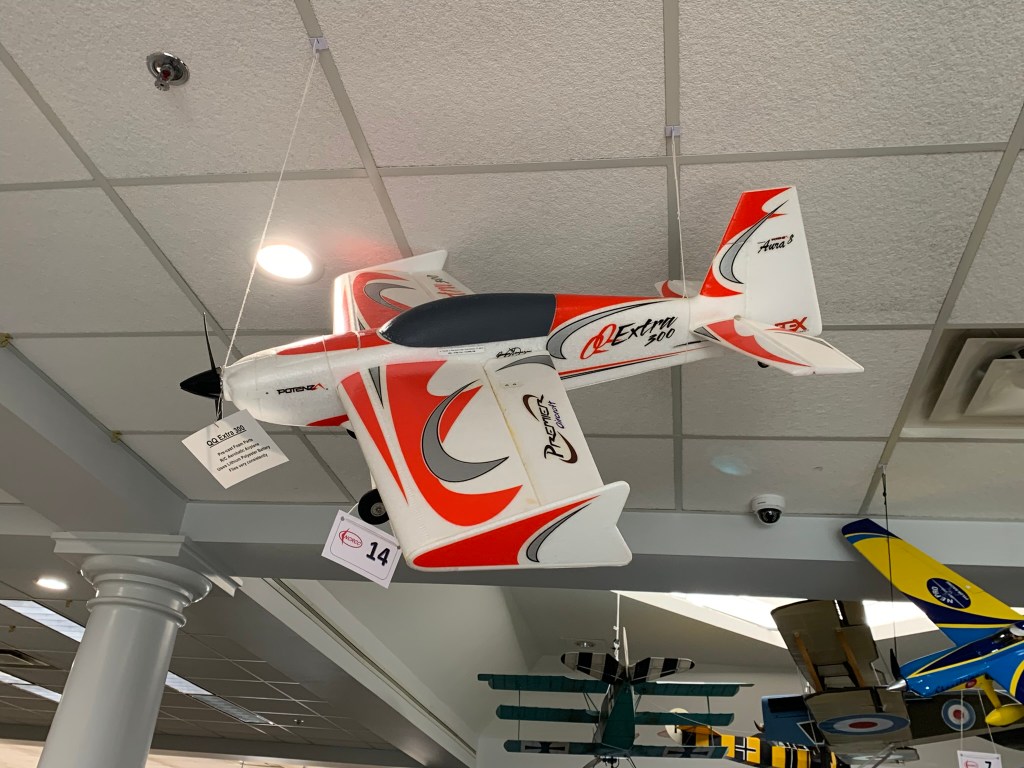
The Extra 330 is a high-performance, aerobatic aircraft designed for unlimited aerobatics and competitive aerobatic competitions. Developed by Walter Extra, a German aerobatic pilot and aircraft designer, the Extra 330 is part of the Extra Flugzeugbau line of aerobatic planes. It is known for its exceptional maneuverability, agility, and strength, making it a popular choice among aerobatic pilots and performers worldwide.
The aircraft on display is a profile-type model made of molded Styrofoam. By using a flat or ‘profile’ fuselage, it makes the design and construction much easier while providing an authentic look in flight.
The model is powered by an electric motor using a lithium-ion battery.
Courtesy of Irv Thurrott of South Windsor
#15 MaXX Powered Glider
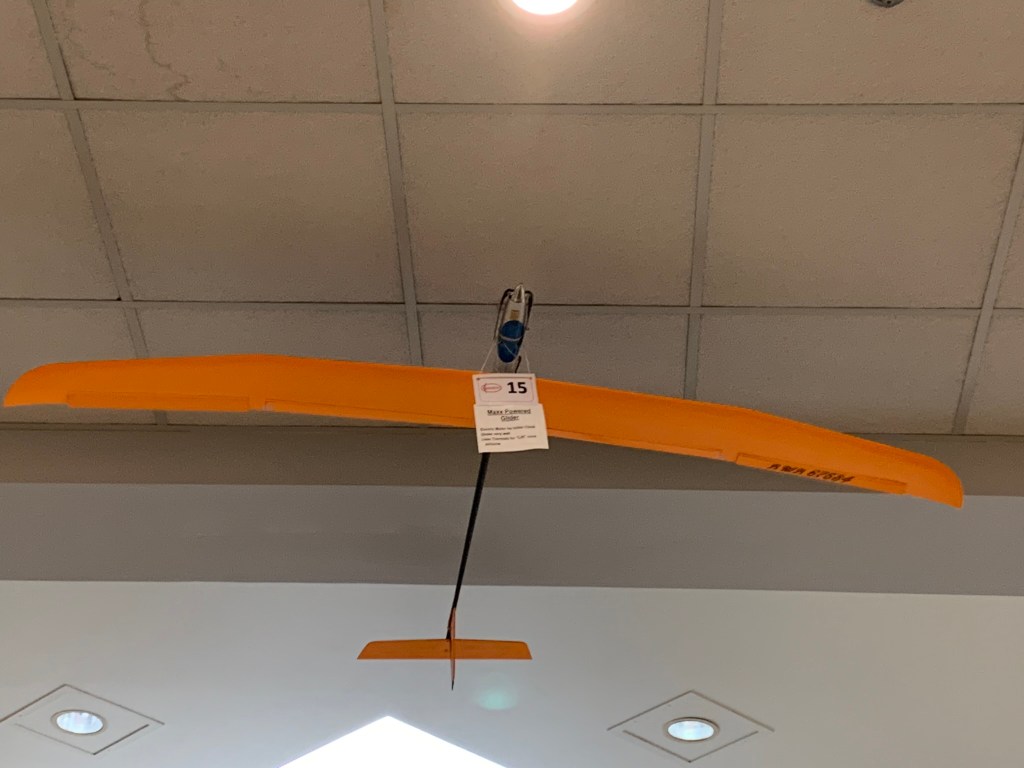
A powered glider is designed with a retractable or foldable propeller and an electric motor. The motor is used to propel the glider during takeoff or to climb to higher altitudes, and once at the desired altitude, the engine can be shut down, and the propellor will fold back, allowing the glider to soar using aerodynamic lift and thermals like a conventional glider.
This model uses the electric motor for initial climb-out. Once altitude is reached, the motor is shut off, the propellor folds back and it performs like a ‘normal’ glider using thermal air currents for gaining altitude. the electric motor is used of no thermals can be found to help it return to the airfield.
Courtesy of Irv Thurrott of South Windsor
#16 Fokker DVIII
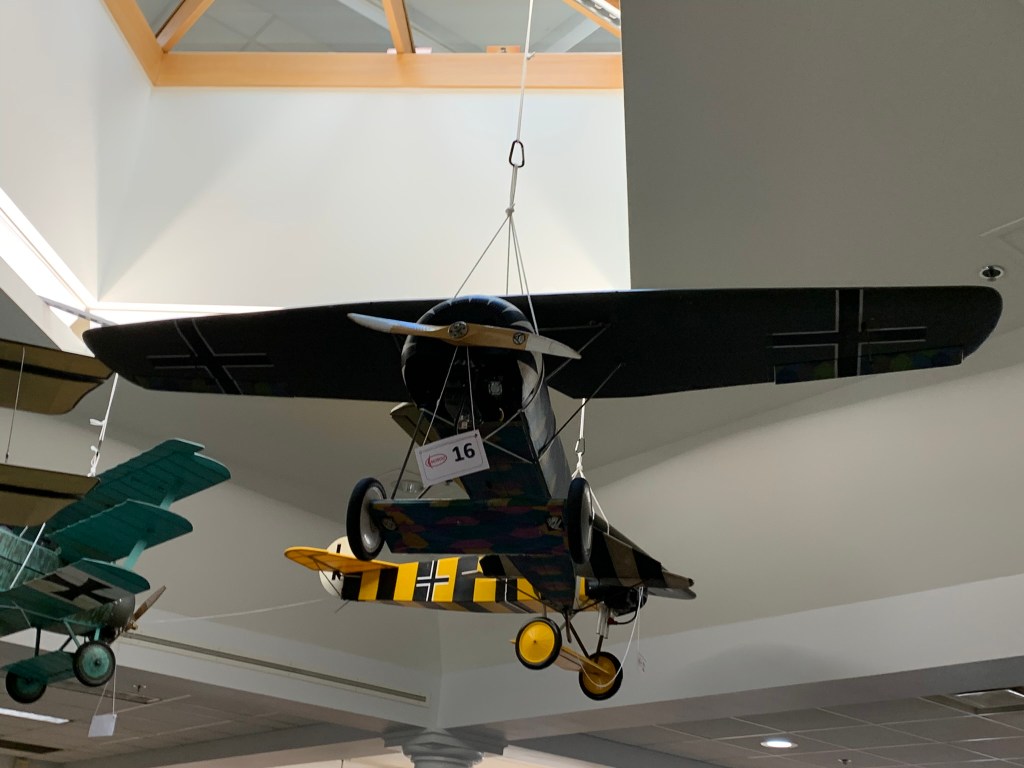
The Fokker D.VIII, also known as the Fokker E.V, was a German fighter aircraft developed towards the end of World War I. It was designed by Reinhold Platz and Anthony Fokker and entered service in 1918. The Fokker D.VIII was a departure from earlier Fokker designs, featuring a cantilever low-wing monoplane configuration instead of the biplane layout commonly used by most aircraft of that era.
This aircraft was known for its exceptional climb rate and maneuverability. It was powered by a 110-horsepower Oberursel Ur.II rotary engine, which gave it good performance at higher altitudes. The Fokker D.VIII had a unique wing design with thick airfoil cross-sections, which contributed to its exceptional climbing ability but also led to a tendency for the aircraft to enter dangerous spins if mishandled.
Courtesy of Bob Spooner of South Windsor
#17 Turbine-Powered Sport Jet
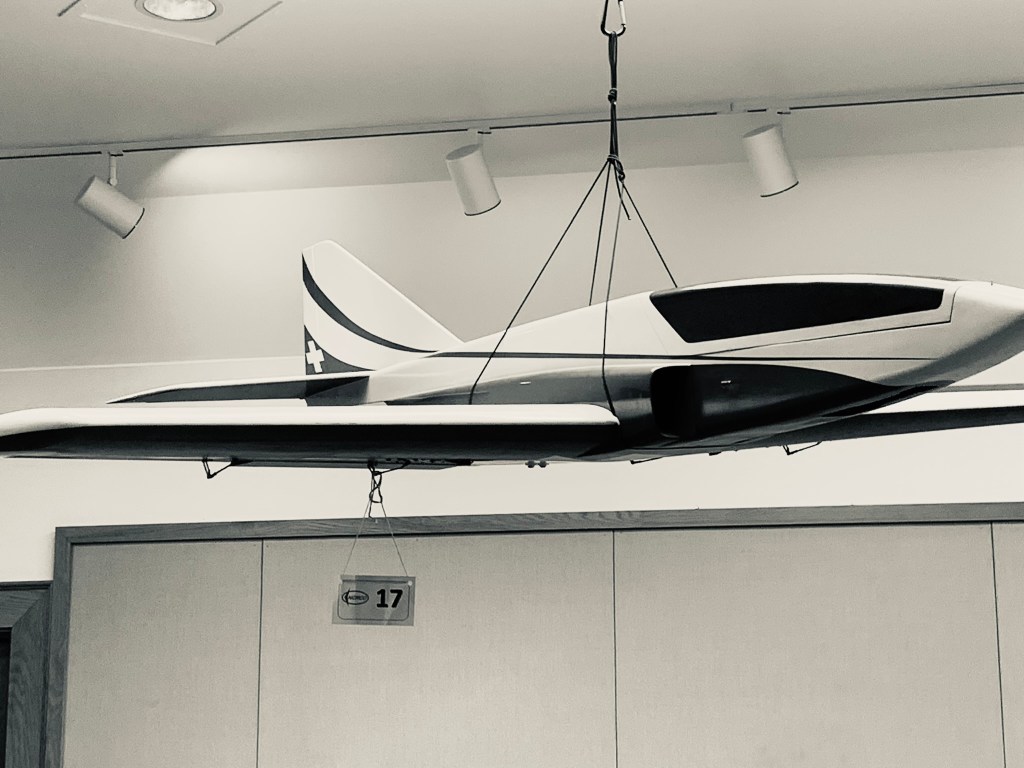
This plane is called a sport jet and is modeled after those used by the Swiss Air Force airshow team, ‘Patrouille Swiss’.
The model is made mostly of balsa and plywood, with other materials used where necessary such as the exhaust shroud which must withstand temperatures of several hundred degrees.
The model is powered by a gas turbine engine burning kerosene or jet fuel, producing over 15 pounds of thrust.
Maximum airspeed is over 120 miles-per hour.
Constructed by and courtesy of John Palica of South Windsor.
#18 Royal Aircraft S.E.5a

This is an electric-powered, foam model of the large aircraft featured in #8.
Courtesy of Bob LaFlamme of Enfield
#19 Large-Scale High-Wing Trainer
This is a model of a typical high-wing trainer aircraft. It has a 72″ wingspan and is powered by a 10cc, two-stroke, alcohol-fueled engine.
The large size, high-wing and tricycle landing gear make for a sure, stable flyer, ideal for beginners.
Courtesy of Bob Laflamme of Enfield.
#19 72″ High-Wing Trainer
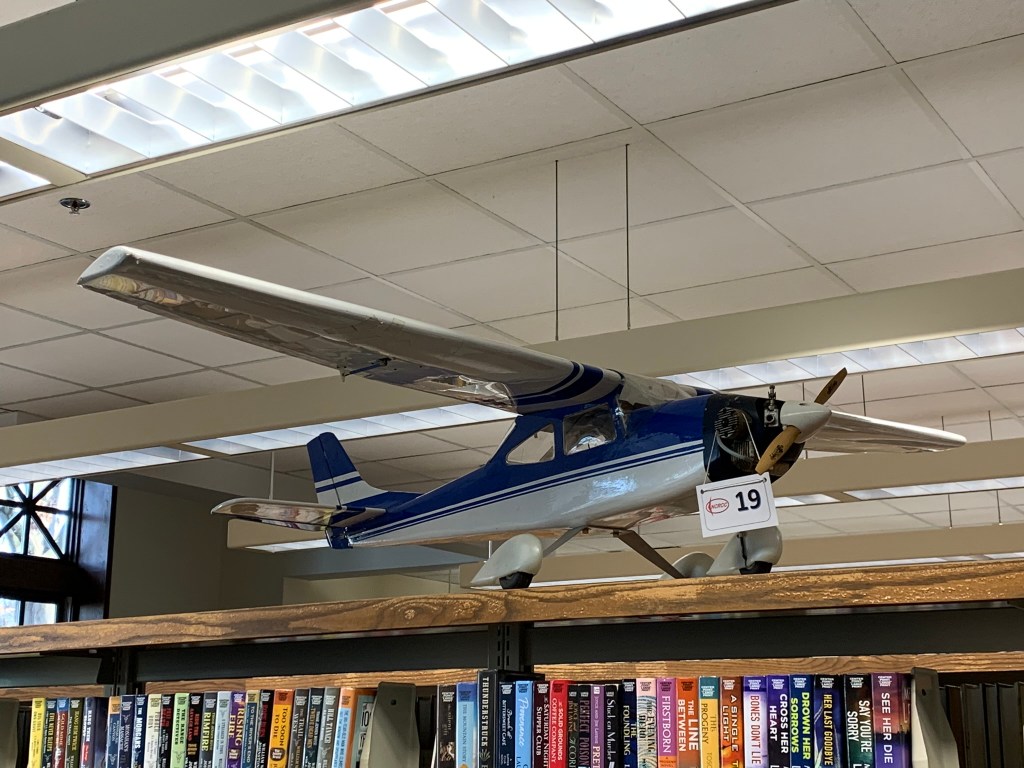
While not a scale model of an actual aircraft, the is a high-wing style reminiscent of a Cessna or other full-scale craft. With a large wing mounted above the fuselage, most of the aircraft weight is below, making it very stable and forgiving. These types of planes make excellent trainers and are used by instructors in full-scale as well as models.
It is powered by a 10cc alcohol-fueled engine.
Courtesy of Bob Laflamme of Enfield.
#20 Proctor ‘Antic’ monoplane.
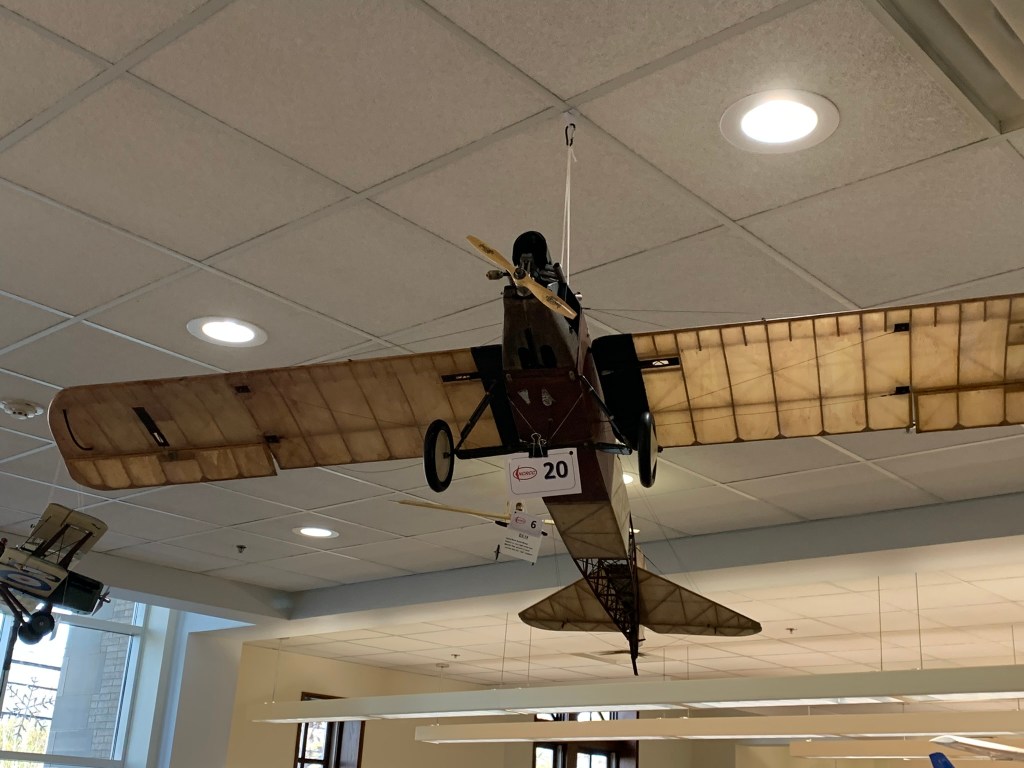
Proctor Enterprises is a supplier of museum-quality kits for the modeling community. The plane displayed pays homage to the early years of aviation and incorporates several features of aircraft flown in the early 1900’s such as the open cockpit, the skeleton fuselage, upper and lower support wires for the wings, and translucent covering.
This is a very easy model to fly and with a small four-stroke motor sounds very realistic.
Courtesy of Bob Laflamme of Enfield.

